
Grant application review for EU and German funding
Evaluators can only score what is on the page. BeFunded reviews your draft against the official criteria before you submit, or the evaluators' feedback after a rejection, with the fee agreed upfront.
Free 30-minute call, founder to founder. No obligation.



What is a grant application review?
A grant application review is an independent expert check of your draft before submission. We test it against the funder's rules and criteria, score it as an evaluator would and show you what to fix while there is still time.
It also works after a rejection. We read the Evaluation Summary Report or the refusal letter, separate presentation problems from real limits of the project, and help you choose between resubmitting, objecting and moving to another programme.
What does our grant application review cover?
A grant proposal review from BeFunded reads your draft as the evaluators will: against the published criteria, the call text and the formal rules. You get scores, the changes that move them most and a clear recommendation.
Scored mock review
Also called a red team review. We score your draft criterion by criterion on the funder's own scale, comment on every weak passage and rank the fixes by how much they would change the score.
Compliance and eligibility check
A formal error can end an application before anyone scores it. We build a grant application checklist from the call text, then check eligibility, page limits, annexes, partner rules and budget categories before anything is uploaded.
Budget and numbers
We test the budget against the work plan and the cost rules. In the EU Innovation Fund, for example, the grant is based on the relevant costs defined in the call, not the total project cost.
Clarity and editing
Grant proposal editing for a sceptical technical reader. We cut slogans, replace adjectives with metrics, name the technical uncertainty and make every claim checkable, without changing what your project is.
Rejection and resubmission review
Rejected before? We go through the evaluators' comments line by line, show what the text failed to prove and tell you whether the next step is a resubmission, an objection or a different programme.
Pitch and interview rehearsal
The EIC interview is 10 minutes of pitch and 35 minutes of questions, with consultants barred from the room. We test your deck against the full proposal and rehearse until your team can carry it alone.
BSFZ application check
For the Research Allowance (Forschungszulage), the BSFZ judges the German form fields and the work plan; text attachments are ignored. We check each field against its character limit and the three criteria: novelty, technical risk or uncertainty, and a systematic, planned approach.
Deadline coming up?
Send us the call and your submission date, and tell us where the draft stands. We will tell you what a review can still change in the time left.
How does the grant review process work at EU and German funders?
Proposal evaluation follows published criteria. EU funders have independent experts score each application; in Germany, the BSFZ (the body that certifies Research Allowance projects) uses its own scientific reviewers and the BMFTR (the Federal Ministry of Research, Technology and Space) may consult outside experts. Most evaluators never meet you, so the written application has to carry the whole case.
3+
independent experts evaluate a Horizon Europe proposal as a rule, five or more in some cases
3 of 4
EIC Accelerator experts must give a GO before a short proposal moves on
EIC Accelerator Guide for Applicants, November 2025 (opens in a new tab)
3.6
minimum average per criterion on the 1 to 6 scale for a Eurostars application
Eureka, Eurostars evaluation guide, June 2026 (opens in a new tab)
Selections counted to January 2026. The Commission puts the share of above-threshold proposals left unfunded at about 70%.
European Commission, COM(2026) 255, May 2026 (opens in a new tab)
Please be aware that proposals will be evaluated as they were submitted, rather than on their potential if certain changes were to be made.
What can you do after a rejection?
The formal routes are narrow. A Horizon Europe evaluation review must come from the coordinator within 30 days of opening the result letter and covers the procedure only. The merits are not assessed again, and any re-evaluation is done afresh by new evaluators.
The EIC Accelerator dropped its rebuttal option in January 2024, and its remote evaluators do not see earlier submissions. Eurostars treats every resubmission as a new application, and its redress covers procedure only.
The BSFZ is different: an objection within one month of notification can turn a refusal into a certificate, as it did for two of our clients. For EU programmes, the time to fix an application is before you submit it.
What does a well-argued application look like in practice?
Six cases from our work, including two refusals that became certificates on objection. Practical examples based on real projects: anonymised, figures rounded.
-
Research Allowance · Engineering software
€70k
certified after appeal
Read the storyKey finding: the project was too broad, the technical risk not tangible and the line to the state of the art missing. Once that was fixed, the very same work was certified.
-
Research Allowance · Climate-tech
€75k
certified after appeal
Read the storyKey finding: the external work had to show its own technical uncertainty. The objection, filed on time, re-argued the project along the three criteria.
-
Research Allowance · Mobile app
€725k
allowance, in-house work only
Read the storyKey finding: one strand had no open technical question and was rejected, as expected. Filed as a separate project, it left the two strong projects untouched.
-
Research Allowance · Artificial intelligence
€1.75M
allowance, in-house work only
Read the storyKey finding: methods, parameters and metrics instead of slogans, with the state of the art argued as of the project start.
-
Research Allowance · MedTech manufacturing
€910k
allowance over the term
Read the storyKey finding: each strand got its own objective, uncertainty and solution path, with concrete metrics and abort criteria. All three were certified.
-
EIC Accelerator · MedTech diagnostics
€2.4M
grant part
Read the storyKey finding: the grant covered the last development steps, and the scale-up was left to the optional EIC Fund equity.
What founders say about working with us
They turned our browser-based simulation work into a fundable application, and stayed persistent all the way to approval.


A great application for our AI research, approved in record time, with refreshingly down-to-earth advice.

 (opens in a new tab)

They got us cleanly through the SME research-grant jungle.

 (opens in a new tab)

What do evaluators look for in each programme?
Every programme has its own evaluators, criteria and pass rules, and our reviews follow them. Pick a programme to see who assesses your application, how, and the red flags we check first.
Europe
EIC Accelerator
Three stages · GO, score, jury- Who evaluates
- Short proposal: four remote experts. Full proposal: a technology expert and a panel of at least three. Interview: a jury of up to six, with consultants barred from the room.
- How it is scored
- Short proposal: at least three GOs from four experts. Full proposal: 0 to 5 per criterion, at least 4 on each and 13 of 15 overall. The top-ranked proposals, together requesting about 2.5 times the available budget, go to interview.
- Red flags we check
- Applying before TRL 5 is completed, pitching an incremental innovation, a weak business or financing case, no clear need for EU support, and treating the equity as a grant.
- What our review covers
- A mock review of your short or full proposal, the claims the technology expert will test, and pitch rehearsal. After three unsuccessful submissions since 2024 you cannot apply to the EIC Accelerator again until Horizon Europe ends in 2027; withdrawing before the result does not count.
Horizon Europe
Expert panels · 0 to 5 scale- Who evaluates
- As a rule at least three independent experts, five or more in some calls. Each writes an individual report, together they agree a consensus report, and a panel review sets the ranking.
- How it is scored
- 0 to 5 per criterion, half marks allowed, with a threshold of 3 per criterion and 10 overall. In Innovation Actions, Impact counts 1.5 times for the ranking. Stage one of a two-stage call scores Excellence and Impact only, threshold 4 on each.
- Red flags we check
- A thin impact section (in practice it often decides the ranking), a TRL claim without evidence in the proposal, and gaps the evaluator would have to fill in, since proposals are judged as submitted.
- What our review covers
- A mock review per criterion with scores and comments, plus the work plan, the consortium and the allocation of resources. About 70% of proposals above the threshold went unfunded in 2021 to 2025, so passing is not enough.
Eurostars 3
Central ranking · 1 to 6 scale- Who evaluates
- Three remote experts assess each eligible application. The best, 200 in Call 12, go on to an Independent Evaluation Panel of up to 20 experts, whose ranking list decides which applications are selected for funding.
- How it is scored
- 1 to 6 per sub-criterion across three equally weighted criteria, with an average of at least 3.6 on each. The panel sorts applications into groups 1 to 6: group 5 is the minimum to be recommended, group 6 is funded automatically.
- Red flags we check
- A non-compliant consortium (rejected before evaluation), a partner that cannot be funded in its own country, market-development costs in an R&D budget, and treating the call as non-competitive.
- What our review covers
- The seven international eligibility criteria first, because the eligibility check comes within a week of the deadline and ineligible applications are rejected. Then a mock score on all three criteria, since every resubmission is treated as a new application.
EU Innovation Fund
Cascade scoring · no overall threshold- Who evaluates
- An evaluation committee made up entirely of independent outside experts assesses every application.
- How it is scored
- In the 2025 call, large, medium and small-scale projects score up to 72 points plus 3 bonus points. Each criterion has minimum scores, there is no overall threshold, and scoring stops at the first missed minimum, starting with 9 of 15 for innovation.
- Red flags we check
- Weak or poorly quantified GHG impact, an immature project, a poor ratio of emissions avoided to support requested, and claiming the total project cost instead of the relevant costs.
- What our review covers
- The GHG calculation, the maturity evidence and the cost calculation, checked against the minimum scores, because a miss early in the cascade ends the evaluation. We also test the cost-efficiency ratio, worth up to 12 of the 72 points.
Germany
Research Allowance (Forschungszulage)
BSFZ certificate · three criteria- Who evaluates
- The BSFZ, run by VDI Technologiezentrum, AiF Projekt GmbH and DLR Projektträger, with scientifically qualified reviewers. Its certificate binds the tax office on whether the project is R&D, not on the costs.
- How it is scored
- Novelty, technical risk or uncertainty, and a systematic, planned approach: all three must be met. The form fields and work plan count, text-only attachments do not, and a decision is expected within three months of the receipt confirmation.
- Red flags we check
- A commercial description, a technical uncertainty never stated precisely, routine development not fenced off, contract research structured the wrong way, and economic or GDPR risks offered as the technical risk.
- What our review covers
- Every field against its character limit and the three criteria, for example 1,500 characters for the objective and 500 for the state of the art. After a refusal, we prepare the objection, which is due within one month.
KMU-innovativ
Two stages · competitive outline- Who evaluates
- The BMFTR, which may consult independent experts. All outlines submitted by a cut-off compete against each other.
- How it is scored
- Stage one is an outline, for example up to 10 pages in the medical technology field, judged on criteria such as fit with the funding goal, innovation level, scientific and technical quality, risk and the exploitation plan. Results usually follow within three months of the cut-off.
- Red flags we check
- Near-market development instead of high-risk research, a weak fit with the technology field, treating the outline as a formality, and starting work before the grant decision without approval of an early start.
- What our review covers
- The outline against your technology field's criteria and format rules, then the full application if you are invited to submit one.
ZIM
Applications paused- Who evaluates
- A ZIM project management agency, which judges innovation level, technical risk, market prospects, team and completeness. Clarification requests come with deadlines.
- How it is scored
- Applications are assessed on quality, which takes a few months, and the project must not have started when you apply. Since 7 July 2026 new applications are temporarily paused, except those with international partners in open bilateral or multilateral calls.
- Red flags we check
- Routine development called R&D, subcontracting above 35% of personnel costs, a weak exploitation strategy, and starting the project or signing binding contracts before the application is received.
- What our review covers
- The technical project description and a credible work and cost plan, for an international call that is still open or for when ZIM reopens.
Also covered:
Rules summarised from the official programme documents in force in October 2026. The current call text and guide for applicants always take precedence.
Tell us about your draft and your deadline
Share the programme, the call and your submission date. A funding advisor reads your message by hand and comes back with what a review would cover and how much time it needs. No obligation.
- Whether a full review still fits before your deadline
- The review depth that suits your programme and stage
- Your fee, agreed before any work starts
How does our grant application review work?
Five steps, planned back from your submission date. You keep ownership of the text: we score, comment and suggest, and you decide what changes.
When to send your draft
Ideally while there is still time to rewrite whole sections. Tell us your deadline in the first call and we will plan the review back from it.
-
First call · free
Brief and scope
We look at the call, the state of your draft and the deadline, then agree the scope: compliance check, full mock review, or review and rewrite. You know the fee before anything starts.
-
First pass
Compliance check
Eligibility, page and character limits, mandatory annexes and the call's formal rules come first. These errors are the cheapest to fix and the most expensive to miss.
-
Core review
Scored mock review
We score the draft on the funder's own scale and comment criterion by criterion, in the style of an evaluation report. Every comment points to a passage and a concrete fix.
-
Debrief
Scores, priorities and a verdict
In a call with your team we go through the scores, the changes that move them most and our verdict: submit, fix first, or wait for a later cut-off.
-
Before you submit
Second look or rewrite
If agreed, we check the revised version against our comments or rewrite the weak sections with you. For the EIC Accelerator, we also rehearse the interview.
Why choose BeFunded for your grant application review?
We read your application as an evaluator would: against the criteria, with the evidence in view, and without telling you what you want to hear.
A→Z
We write and manage applications too
Our team writes and manages applications as well, so every comment comes with a fix that works in practice, and we can take over the rewrite if you want.
✓
The evaluator's lens
We score on the funder's own scale and against the published criteria, as independent experts would. You see the weak points before an evaluator does.
Fit
An honest verdict
Sometimes the right advice is to wait, to drop a weak project or to file it separately. In one mobile app case, the weak strand went in as a project of its own, so its expected rejection left the two strong projects untouched.
DE+EU
German and EU programmes, one team
We cover the EIC Accelerator, Horizon Europe, Eurostars, the EU Innovation Fund and the German programmes, so we can tell you when a different programme fits your project better.
AI
AI first pass, human judgement
Our own platform, GrantBite, runs a first compliance and gap check against the call text. A consultant then reads every line and makes the judgements software cannot.
€
Fee agreed upfront
You know the fee and the scope before we start. For the Research Allowance, you pay nothing unless the allowance is paid out.
100+
clients funded
€42M
Research Allowance secured for clients
€380k
average funding per client
BeFunded compared with the alternatives
| BeFunded | Internal read-through | General proofreading | |
|---|---|---|---|
| Who reads it | Funding specialists who also write and manage applications | Colleagues who know the project too well | Editors without a funding background |
| Measured against | The programme's criteria, scale and thresholds | What the team already believes | Grammar, style and length |
| Formal rules | Eligibility, limits and annexes checked first | Often checked last, under time pressure | Usually out of scope |
| What you get | Scores, prioritised fixes and a clear verdict | Comments in the margin | A cleaner text |
| Fee | Agreed upfront | Looks free, but ties up your team | Low, but covers language only |
BeFunded
- Who reads it
- Funding specialists who also write and manage applications
- Measured against
- The programme's criteria, scale and thresholds
- Formal rules
- Eligibility, limits and annexes checked first
- What you get
- Scores, prioritised fixes and a clear verdict
- Fee
- Agreed upfront
Internal read-through
- Who reads it
- Colleagues who know the project too well
- Measured against
- What the team already believes
- Formal rules
- Often checked last, under time pressure
- What you get
- Comments in the margin
- Fee
- Looks free, but ties up your team
General proofreading
- Who reads it
- Editors without a funding background
- Measured against
- Grammar, style and length
- Formal rules
- Usually out of scope
- What you get
- A cleaner text
- Fee
- Low, but covers language only
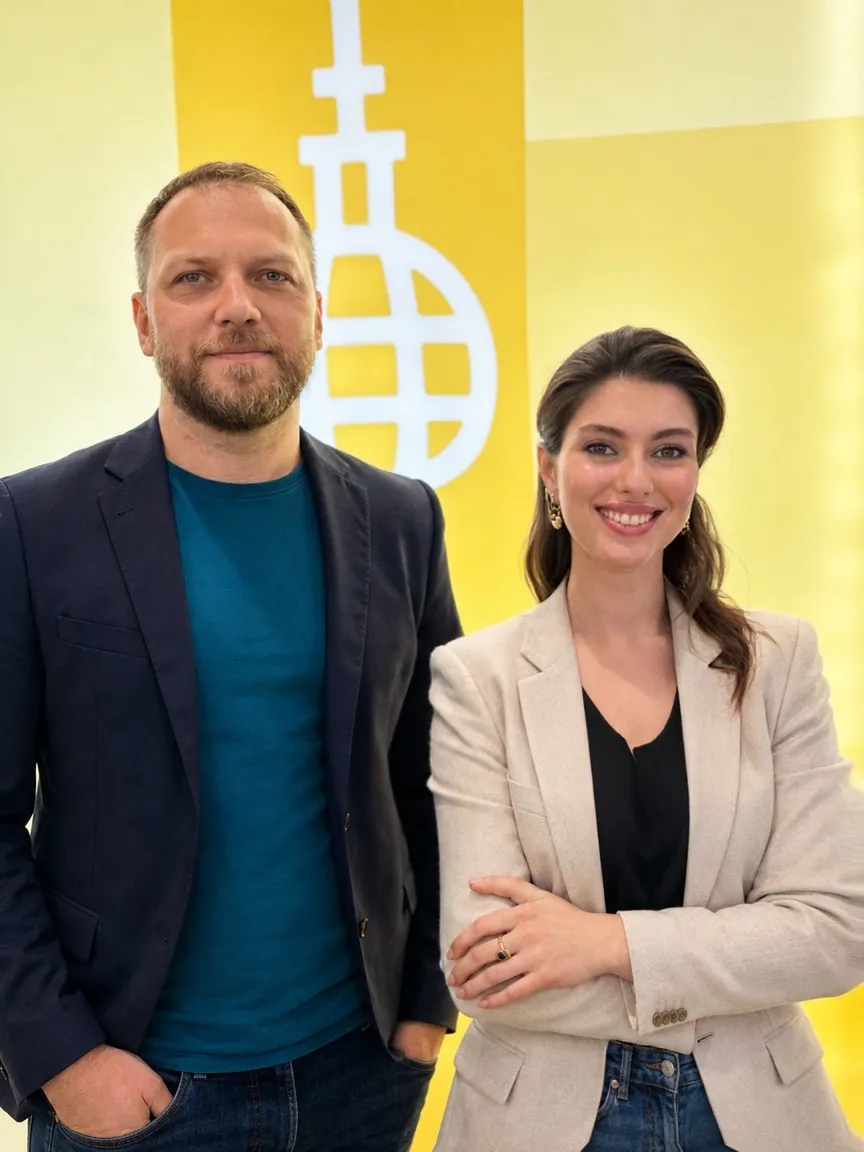
If your team is developing something genuinely new, you should be able to claim what you are owed without it becoming a second job.
Kirill & Aydan, co-founders
Can AI review a grant application?
Partly. AI handles the mechanical checks well: missing sections, call questions left unanswered, page limits and figures that do not match. Whether an evaluator will believe your impact case is a judgement call, and that still needs a person.
So we use both. GrantBite, the AI funding platform built by the BeFunded team, runs the first pass, and a consultant reads every line after it.
- Review mode
- A compliance and gap check of your draft against the programme's rules
- Ask mode
- Questions and answers over the guidelines and your own documents
- Dual Context
- Every AI-drafted paragraph is grounded in your project profile and in the programme's own eligibility and evaluation text
- Prompt Library
- Expert-written prompts for EU, national, research and SME applications
One missing mandatory element can make a proposal ineligible.
Teams that draft in-house can run GrantBite's Review mode themselves and bring us in for the final read before submission.
GrantBite is operated by Wheels & Wings Lab GmbH, the company behind BeFunded.
How much does a grant application review cost?
It depends on the programme, the length of the draft and how deep the review goes. An EIC short proposal and a Horizon Europe consortium proposal are very different jobs. Our fee is a fixed share plus a success component, agreed before work starts. For the Research Allowance it is purely success-based.
Compliance check
Eligibility, formal rules, limits and annexes, checked against the call text. The quickest option when the deadline is close.
Full mock review
The compliance check plus scores and comments per criterion, prioritised fixes, a verdict and a debrief call with your team.
Review and rewrite
The full review, then we rewrite the weak sections with you and check the final version before you submit.
Research Allowance
For the Research Allowance we work purely success-based, whether it is a review, an application or an objection: 10% of the funding up to €500k per year, 5% above, invoiced after payout.
What shapes your quote
The programme and the stage of the application
Length of the draft and its annexes
How deep the review goes
Number of review rounds
Time left until the deadline
The first call is free, including our view on whether a review is worth it before your deadline.
Grant application review questions, answered
Last updated: October 2026
A grant application review is an independent check of a funding application by experts who know how the funder evaluates. It covers eligibility and formal rules, scores the draft against the published criteria and lists the changes that would raise the score.
Independent experts score them against published criteria. In Horizon Europe, at least three experts usually score Excellence, Impact and Implementation from 0 to 5, agree a consensus and pass it to a panel. Applicants receive an Evaluation Summary Report with comments and scores.
Evidence that the project meets each criterion as written. Reviewers look for a technical advance over the state of the art, a credible impact or market case, a realistic work plan and budget, and a team that can deliver. Claims without evidence score poorly.
Our fee is a fixed share plus a success component, set by the programme, the length of the draft, the depth and the number of rounds, and agreed before work starts. For a Research Allowance application or objection, we work purely success-based.
As soon as it is complete enough to judge, ideally weeks before the deadline, so whole sections can still change. BSFZ applications have no cut-off, but the tax claim lapses after four years and a decision can take three months, so earlier is better there too.
Yes. We read the Evaluation Summary Report or the refusal and show what the text failed to prove. A BSFZ refusal can be challenged within one month. Horizon Europe's evaluation review covers procedure only, so a stronger resubmission is usually the better route.
No. Strong applications still compete for limited budgets: in Horizon Europe, about 70% of proposals that passed the quality threshold in 2021 to 2025 were not funded. A review removes avoidable errors and strengthens the case, the part you control.
Then we tell you why. After three unsuccessful submissions since 2024 you cannot apply to the EIC Accelerator again until the end of 2027, and withdrawing before the evaluation result does not count, so waiting for a stronger version can save an attempt.
Yes, for the mechanical part. GrantBite's Review mode runs a compliance and gap check against the programme's rules. Judging whether evaluators will find your impact case credible still needs an expert who knows the programme, which is why our reviews combine both.
Yes. Only the people working on your review see your draft, and your details are never shared. Project data is processed and stored in the EU, and we can sign a non-disclosure agreement before you send anything.
Further reading
Programme guides
From the BeFunded blog
Tell us what you are about to submit
Share the programme, your deadline and the part you feel least sure about. We will read your message by hand and tell you what a review would change. No prep, no obligation.